I love spring – spring and autumn are my favourite times of the year – but with spring comes allergies and they are something I really wish I could live without. The runny nose, the weepy eyes, the crusty eyes, the headaches, the tight chest, the foggy brain, the cough…so may symptoms that suck when experienced alone but that make life a living nightmare when experienced together. This year they’re hitting me hard and we’re only in the early days. I kid you not, this could be going on until September if past experience is anything to go by.
By some miracle I only remembered suffering the mildest of symptoms last year. When I looked back on why that might have been, I remembered that I was drinking a specific blend of herbs every single morning, (my attempt at mixing up a chlorophyll-rich blend in an attempt to replicate in a more holistic manner the liquid chlorophyll my sister was drinking) some of which are noted for their antihistamine effects. I decided to get back on the blend and see if it has any effect this year, albeit starting months later than I had last year. So far so good, I have more symptoms than I did last year but on the days when I’m good and remember to drink this tea, the symptoms are substantially milder.
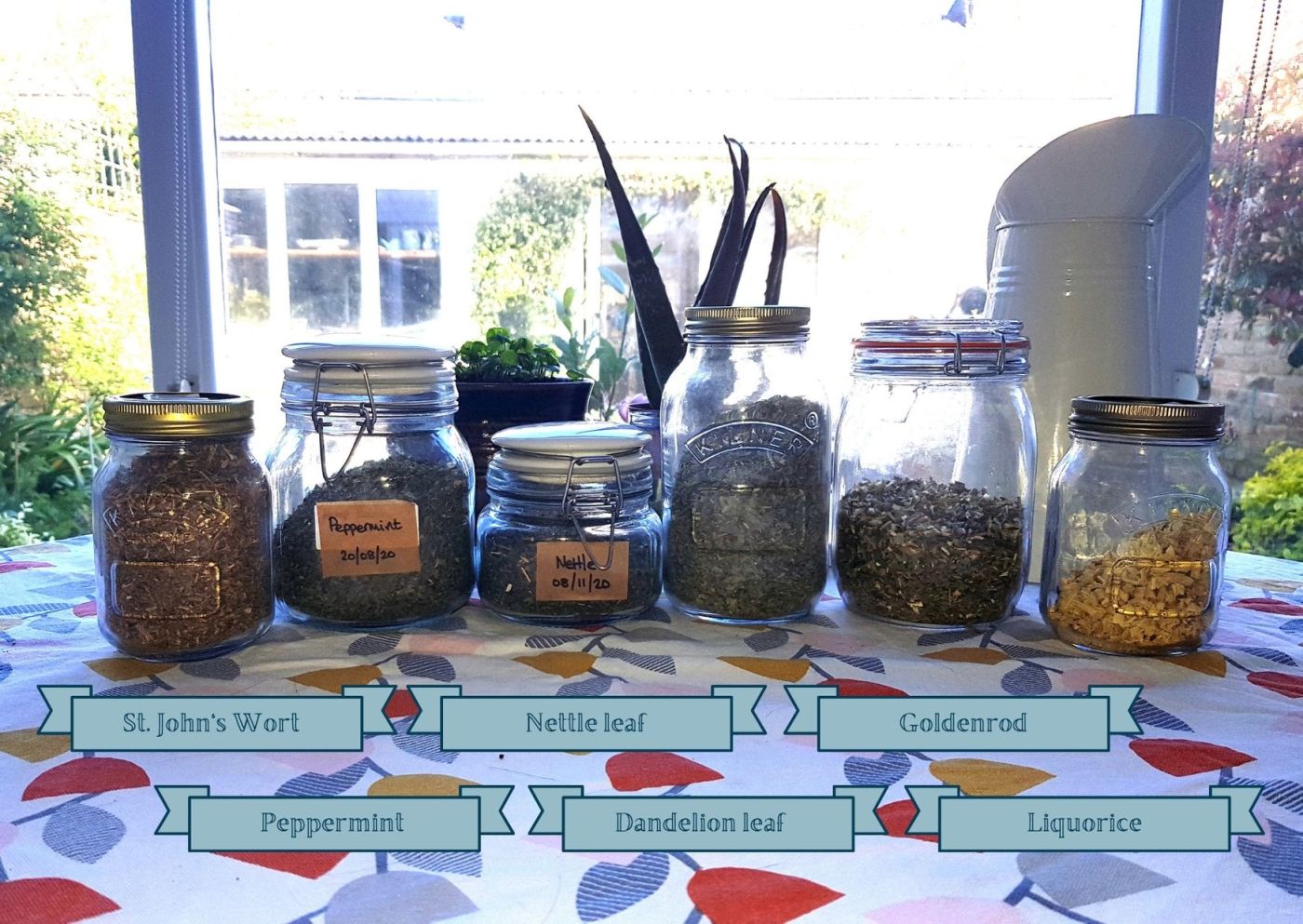
The magical herbs in question? Nettle, dandelion, goldenrod, peppermint, liquorice and St. John’s Wort. Almost of all of which can be found easily grown or foraged (liquorice perhaps less so but it’s a nice easy one to find and buy).
- Nettle (Urtica dioica)
Everybody knows nettle but not everybody knows what a serious powerhouse it is. This common “weed” is a nourishing herbal tonic with antihistamine qualities which can be taken daily. Though you will want to balance them out with more moistening herbs as they are incredibly drying. To really make the most of their high nutritional content, nettles are best prepared as a long infusion. I tend to boil them up the night before and drink them in the morning. - Dandelion leaf (Taraxacum officinale)
Like nettle, dandelion greens are a fantastic alterative, most often enjoyed during the spring. Where the root has greater affinity to the liver, the greens are more commonly associated with a stimulating action on the kidneys, clearing metabolic waste. - Goldenrod (Solidago spp.)
Often wrongfully blamed for people’s hayfever symptoms, Goldenrod is actually of great support to those with allergy symptoms ,with it’s pollen actually too large and heavy to be carried through the air. Useful for its effect on the respiratory system and mucous membranes where it tones and dries, as well as it’s supportive qualities in elimination via the urinary tract and skin, Goldenrod is supporting us poor allergy sufferers in a number of ways. - Peppermint (Mentha x piperita)
I’ll be honest here, I mostly add peppermint for flavour and it’s ability to cool and soothe. But it is another nutritive herb which helps to tone and cleanse the liver, amongst it’s better known uses for the digestive system, as well as being anticongestant. - Liquorice (Glycyrrhiza glabra)
I add liquorice to a lot of infusions but in this case it was mostly as a moistening herb to balance out the drying nature of nettles. However, liquorice is considered by many to be an adaptogen due to it’s ability to stimulate the adrenal cortex, is hepatoprotective and is balancing to the immune system – all qualities beneficial to those suffering from allergies. - St. John’s Wort (Hypericum perforatum)
St. Joh’s Wort is perhaps best known for it’s antidepressant action but in this case I use it with some of it’s other beneficial uses in mind. It is anti-inflammatory and well-known relaxing nervine, both qualities that can support the sufferer. It’s ability to induce a liver enzyme that supports in the detoxification process is also to be considered. For those not taking pharmaceuticals, the addition of St. John’s Wort can only be of benefit, but for those who do take pharmaceuticals, do leave it out of your infusion.
This is one of the herb blends I mix up in advance to avoid the faff as you tend to go through a lot drinking it each day. The following lists the proportions I tend to go with but you can mix as you find works for you.
4 parts nettle
4 parts dandelion
2 parts peppermint
1 part liquorice
1 part St. John’s Wort
Add 3 heaped teaspoons to the pot and add boiling water. Let sit overnight and drink in the morning. This is known as a long infusion and allows far more of the nutrients to be drawn out, ready for drinking (nettles also taste way nicer cold in my opinion).
 Herbal She Wrote
Leave a comment