
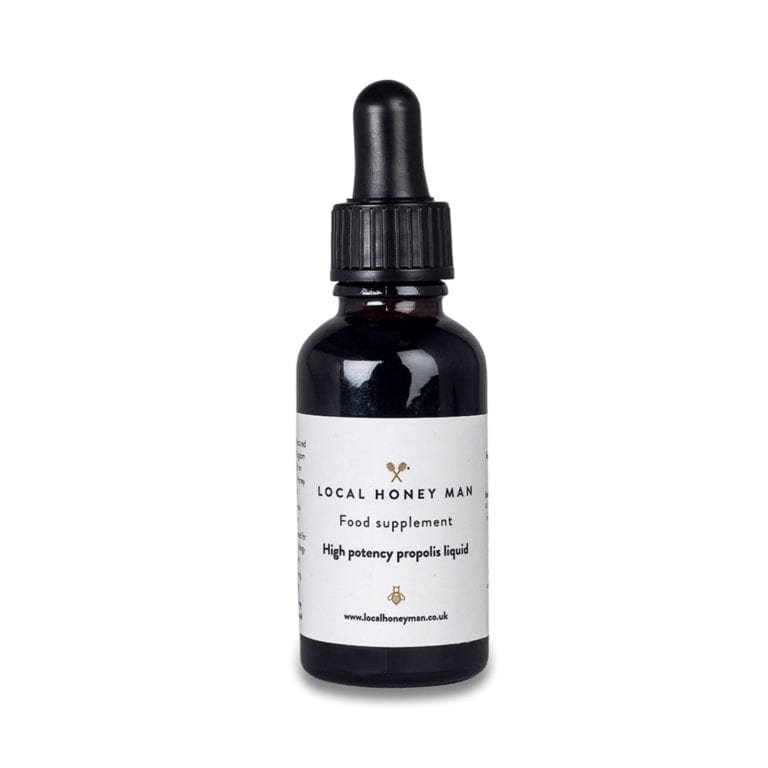
It’s been a funny few weeks and I’ve been having trouble thinking what to write about whilst I stew on “real life” and all that comes with it. This morning though, as I reached into my desk drawer and grabbed my propolis tincture, it struck me that this was probably the perfect topic. I’ve been using propolis tincture a lot recently as I’ve had a mouthful of ulcers (canker sores) which only propolis seems to soothe.
Who shouldn’t use propolis?
I’m mixing things up and putting this first because safety advice is important and should be considered before you read about any potentially wonderful benefits ANYTHING may have.
Do not take propolis if you are on any prescribed blood thinners as it can have a blood-thinning effect itself and negate clotting. For this same reason, stop taking propolis at least two weeks before any planned surgery.
Do not give propolis to babies under one year old, as with honey and for the same reasons.
Do not take propolis if you have a known allergy to bee stings or beeswax. Some say to avoid it if you have an allergy to pollen but I haven’t personally found this to cause me any further issues. I did, however, start with a small dose to test early on.
What is propolis?
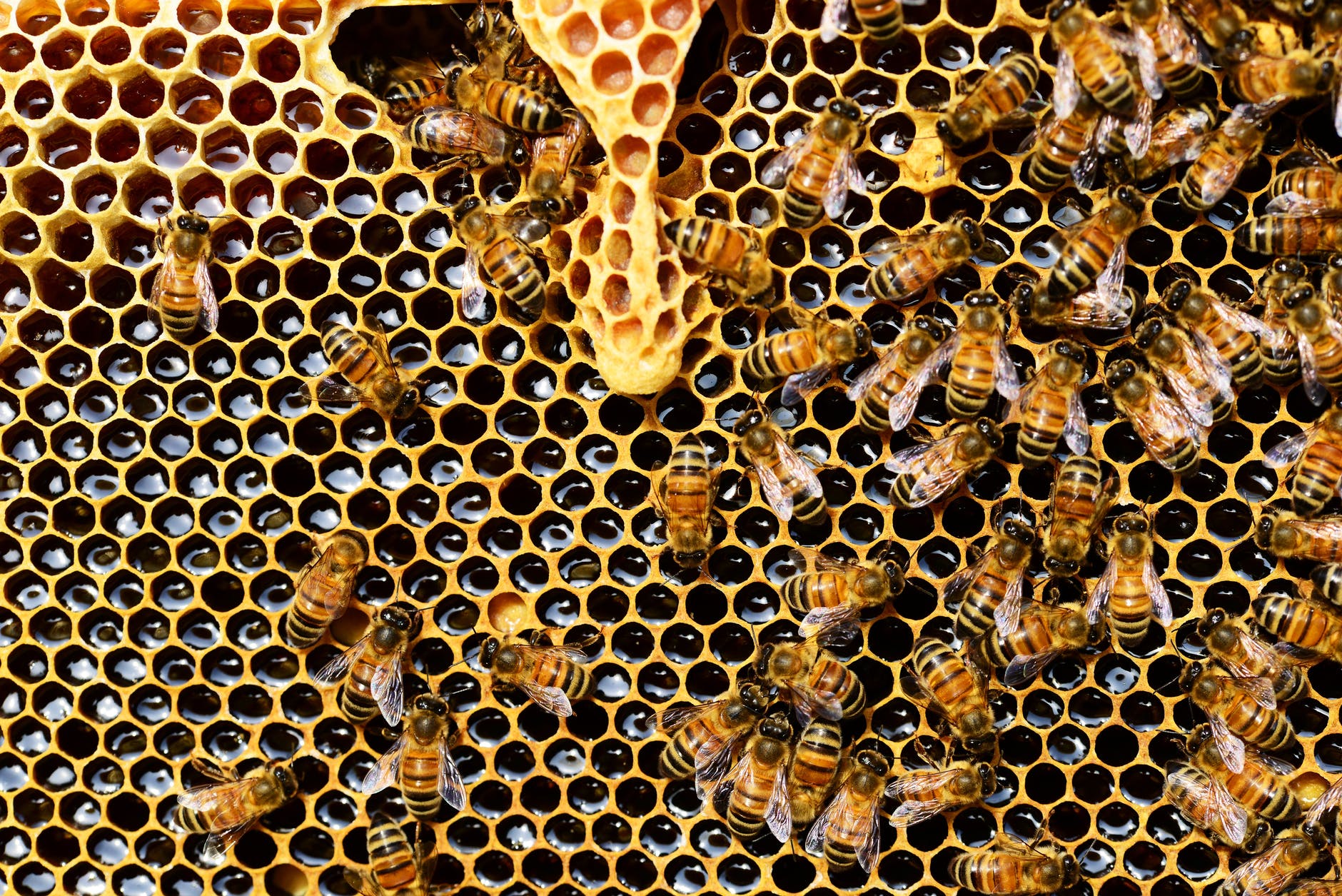
Propolis is a dark (green, red or even brown), resinous substance, produced by bees with the intention of protecting their hives in a number of ways. They use it to seal nooks and crannies, waterproof the hive and even encase infiltrators with the antiseptic substance to save their decomposing bodies from bringing infection to the hive or its occupants.
As with honey, the make up of propolis can vary greatly depending on the geography of the hive but resins, waxes, essential oils and bioflavanoids are key components, often picked up from more resinous trees in the local area. It is said that 300+ constituents have been identified in a single sample of propolis which is incredible.
Far less propolis is produced than honey (approx. 150g – 200g a year) which is why it can be quite expensive to buy, let alone hard to come by, and should be purchased from sustainable sources.
Historical use
Propolis has been used for hundreds of years for all manner of purposes, though it seemed to loose favour in the Middle Ages. There is recorded use of propolis as perfume and a wound-healing medium in Ancient Egypt and Ancient Greece as well as Persia and Rome, whilst some believe that that the often-referred to “Tzori” in the Old Testement is in reference to propolis as medicine.
One has to imagine, that it wasn’t long after the first person started to understand the therapeutic benefits of honey, they started to explore everything created by our little bee friends.
Historical uses
In recent years, scientific studies have been conducted on propolis to try and determine what makes it so special, with the majority being conducted since 2000. A quick search on PubMed shows that 25 studies were published in 2020-2021 alone – not bad going for the year of Covid-19.
These studies have determined propolis to be:
- antibacterial;
- antifungal;
- anti-inflammatory;
- antioxidant;
- antiprotozoal;
- antitumoral;
- antiviral;
- disinfectant; and
- hepatoprotective.
Specific efficacy was also identified for maintaining and supporting oral health as well as wound healing (not unlike it’s sister product, honey).
My source
Though you could make your own propolis tincture, I would argue that it’s a lot more difficult in the UK than is ideal, enjoyable, or even cost effective (unless, perhaps, you keep your own bees). Sourcing good quality propolis from a sustainable source is one challenge, but sourcing the high-proof alcohol required to extract those resins effectively can be a nightmare. Propolis tincture is one of the few tinctures I buy in, rather than make, and I get it from the amazing Local Honey Man.
How to take
I take propolis straight from the dropper bottle, more often than not, but it does have quite strong taste (I would say bordering on bitter) so this may not work for everyone. On their website, Local Honey Man suggest diluting 4 – 5 drops with some warm water which does dilute the flavour and stops some of the waxiness from clinging to your teeth. They also note adding it “to a salad or snack” which I can’t imagine but hey, each to their own. If you try it, let me know how that goes for you.
There is technically no official suggested dose for taking propolis but I only take it once or twice a day. As mentioned, it has a strong taste which tends to linger and really, for my purposes, once or twice a day provides the relief that I need.
 Herbal She Wrote
Leave a comment