Binomial:
Hypericum perforatum
Common names:
(Common St. John’s Wort, perforate St. John’s Wort [4]), (Klamath Weed [7]), (Amber, Cammock, Penny John, Touch-and-heal, Balm of the warrior’s wound, Rosin rose [11])
Family:
Hypericaceae
Parts used:
Flowers, leaves, buds (approximately top 10 cm of the plant)
Native to:
Europe, Western Asia [4] and Northern Africa [10]
Distribution:
Widely naturalised in temperate regions. Often considered a noxious weed in these areas.
Botanical description:
St. John’s Wort is commonly found in wasteland which receives full sunlight [4].
It is a multi-stemmed perennial which grows to approximately 1 ft – 3t [4][7][14]. Stems are long runner stems with opposite, stalkless, light green leaves [4][7].
Around Midsummer in the Northern hemisphere, numerous vibrant yellow flowers with five petals each [7] develop from the upper branches with many stamens united at the base in three bundles. The flowers are peppered with black dots around the margins of the petals. When held to the light, the petals appear perforated. When bruised the bud and flower leave a reddish/purplish dye.
St. John’s Wort likes to be planted with other herbs, such as yarrow.
There are many similar-looking plants (i.e. Hypericum punctatum) but distinguishing features of Hypericum perforatum includes the presence of oil glands and two opposite ridges that can be felt running up the stem [7].
Harvesting:
Harvest flowers and buds in the morning to midday when the plant is dry. It is advised to take approximately the top 10 cm and include some leaves [4]. The leaves contain active flavonoids which are said to enhance hypericin activity (which is found in the flowers and buds) [4].
It’s important to wear gloves when harvesting large quantities, in part to minimise skin staining, but also because the hypericin is readily absorbed whilst picking and may lead to hypersensitivity [4].
History and other traditions:
St. John’s Wort has long associations with “little people”, faeries, witches, saints and other mythical/spiritual figures [6][10]. Maude Grieve noted in A Modern Herbal that it is “believed to be so obnoxious to spirits that a whiff would cause them to fly” [14].
There is evidence that St. John’s Wort has long been used medicinally and spiritually (not so far separated even a century ago), with recent evidence showing its extensive use in Soutra Aisle hospital (est. 1164 CE). In fact, it was held in such high esteem that with the advent of Christianity, it became dedicated to St. John, who’s holy day happens to sit closely to Midsummer, on June 24th [7]. It was also traditionally thrown into fires around Midsummer or feast of St. John to protect against evil spirits [8].
Throughout the Middle Ages SJW was used along with wood betony for psychiatric problems (then considered symptoms of witchcraft). Both these herbs are used in contemporary herbal medicine to strengthen the enteric brain [6].
In France, it was known as “the devil chaser” (chasse-diable) [8], and it has long been a fixture in Russian herbalism where it has associations with almost every malady imaginable [6]. Further afield, SJW was also used by First Nations communities for wound healing, stopping diarrhoea and soothing aching feet, sore eyes and weak lungs [10].
The Eclectic physicians of the 1800s recommended SJW for spinal injuries and it is still recommended for some spinal conditions today [10]. A little late, SJW was mentioned in the 1898 King’s American Dispensary where it was noted for use as a vulnerary, used almost interchangeable with arnica [10].
As one of the herbs most researched in the past 20 years, St. John’s Wort’s potential has been investigated for all manner of issues. During the 1980s it attracted attention for its potential use during the AIDS crisis and more recently still, it was investigated for potential in treating COVID-19.
Medicinal summary:
As noted already, SJW is one of the most studied herbs of the past 20 years [8]; the majority of this research has been conducted on its potential to treat depression. In Germany, it has even been promoted over conventional antidepressant drugs by medical doctors due to this research [11]. However, with ongoing research, it has become more apparent that SJW is most effective in specific types of depression – mild to moderate – with a special affinity for Seasonal Affective Disorder (SAD) and depression stemming from the stomach.
Though hypericin and hyerforin have been quoted as the “key” constituents of St. John’s Wort over the years, it seems to finally be widely acknowledged that no single constituent is most effective on its own [11][13]. Any benefits SJW has, in depression or other situations, stems from use of the whole plant.
Beyond any benefits it may provide in psychological conditions, SJW has a wealth of other practical medical uses which make it a great addition to any herbal first aid kit, something herbalists have long known and experienced.
From supporting the healing of wounds to benefitting the digestive system, easing pain and spasms to fighting viruses, supporting the detoxification of the liver and a particular ability to soothe and regenerate the nerves of the body, SJW is one of my favourite and most used herbs.
However, it should in no way be considered a panacea, especially in an age where pharmaceutical drugs are often a part of people’s daily life. Due to its ability to speed up the livers eliminatory processes, its use is contraindicated alongside many pharmaceutical drugs (often those taken long-term and regularly) and so should not be offered without greater understanding of how it may impact anything clients are simultaneously putting into their bodies.
Constituents:
- Alkaloids [13]
- Catechins [13]
- Napthodianthrones (hypericin and pseudo-hypericin)[11][13][28]
- Flavonoids [hyperoside and rutin (which has a firming effect on veins and capillaries)] [7][11][13][28]
- Phenolics [11]
- Phloroglucinols (huperfotin) [13]
- Proanthocyanidins [13]
- Volatile oil (caryophyllene, methyl-2-octane, n-nonane, n-octanol, n-decanal, a- and B-pinene) [13]
- Xanthones [28]
Actions:
- Alterative [12]
- Analgesic [7][13][25]
- Anodyne [12]
- Antibacterial [8]
- Antidepressant [4][5][7][9][13][28]
- Anti-inflammatory [4][7][9][11][12][13]
- Antimicrobial [4][13][19][28]
- Antiviral [5][7][11][12]
- Antiseptic [5]
- Antispasmodic [13]
- Anxiolytic [11]
- Astringent [4][14]
- Bitter [12]
- Expectorant [14]
- Hepatic [12]
- Nervine [4][5][7][9][14]
- Nerve trophorestorative [11][12]
- Sedative (mild) [9][13]
- Vulnerary [4][5][9][10][12]
Energy:
- Balsamic [6]
- Cooling [10]
- Drying [6][12]
- Relaxant [12]
- Slightly warming [5][12]
Taste:
- Aromatic [12]
- Bitter (mild) [10][12]
- Oily [6]
- Pungent [10]
- Sweet [6][10]
Preparations:
- Compress
- Glycerite
- Infusion
- Poultice
- Salve
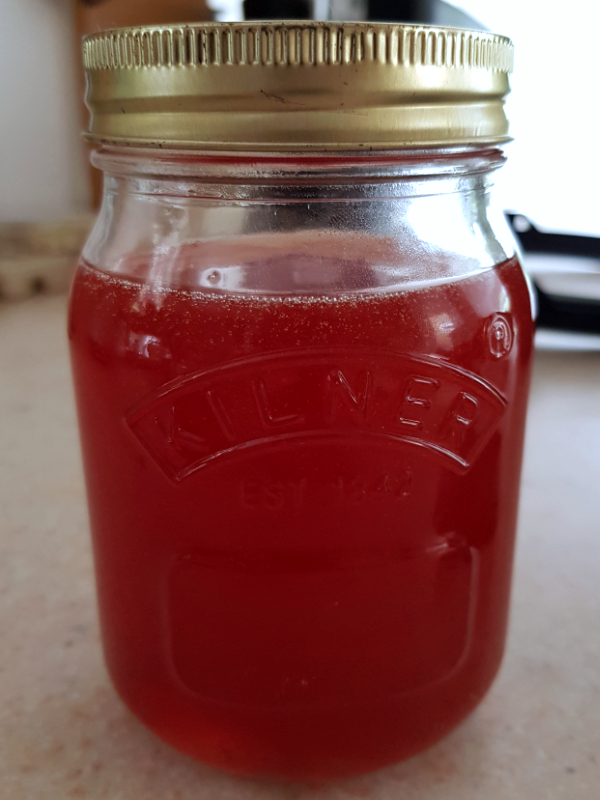
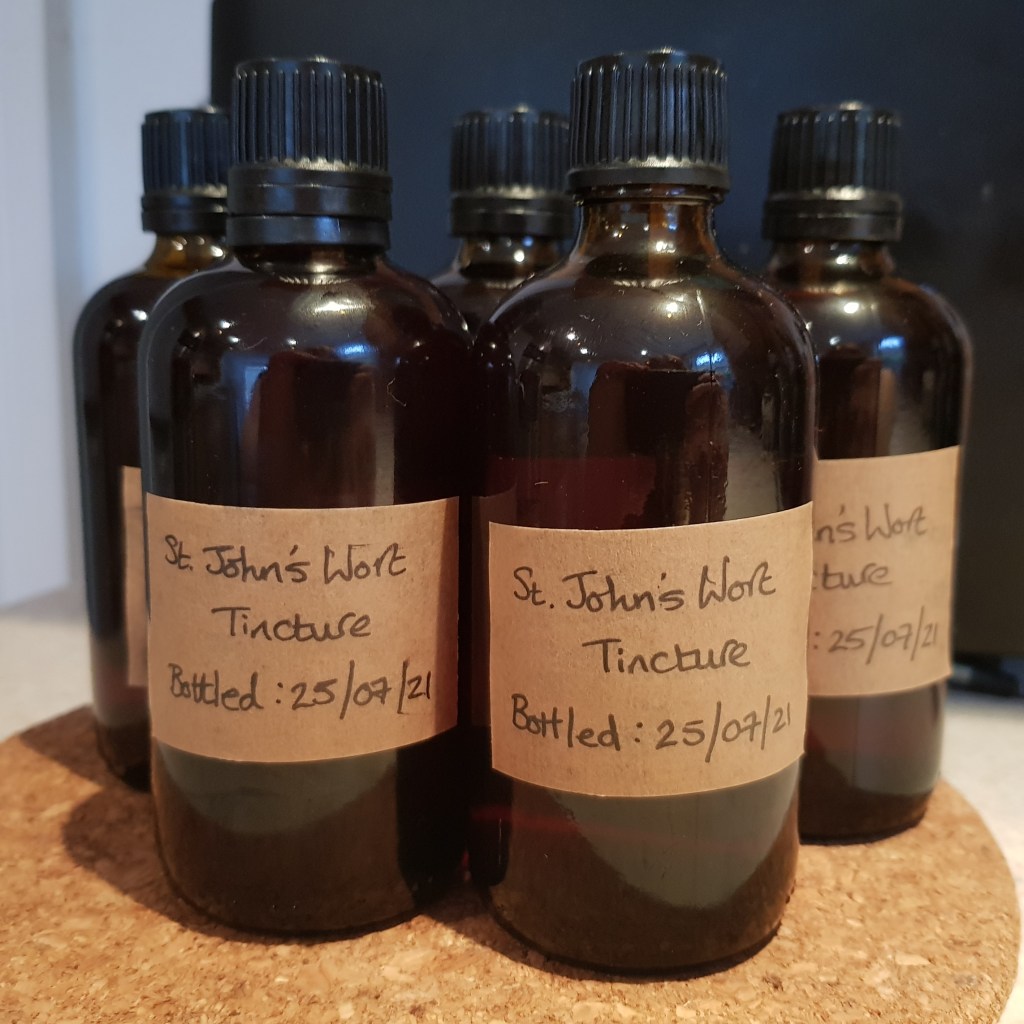
- Tincture
- Oil (traditionally made using olive oil) [14]
Recipes:
- St. John’s Wort oil made from the fresh plant matter can be used topically to ease pain. It is also the “perfect companion for Solomon’s seal for topical post-injury support” [12]
- St. John’s Wort and Cayenne warming oil for topical use in soothing sore muscles and joints [9].
- The oil can be used, slightly warmed, as ear drops [5].
- A salve can be prepared with the oil as a base for “sprains, swelling, ol/mild burns and minor wounds” [4][13].
- The fresh or dry flowers and buds can be used in an infusion [4]. For example, David Winston’s SAD formula is a combination of equal parts St. John’s Wort with lemon balm [5].
Safety:
- Contraindicated when taking a number of pharmaceutical drugs as it causes the liver to process and eliminate them faster [4]. Some current research blames the hyperforin content for such effects [23][24]. The Botanical Safety Handbook lists the following pharmaceutical drugs as those affected by use of St. John’s Wort:
- immunosuppressants;
- anticoagulants;
- antiarrythmics;
- calcium channel blockers;
- anti-anginals;
- hormonal contraceptives (though more recent studies show that this is unlikely);
- anxiolytics;
- antidepressants;
- antivirals;
- statins;
- anticancer drugs (i.e. chemotherapy);
- beta-adrenergic blockers;
- hypoglycemics;
- antiulcer agents;
- antifungals;
- anticonvulsants;
- skeletal muscle relaxants; and
- antihistamines [10].
- It is reported that SJW can cause photosensitivity in some, especially if taken in large doses [4]. However, there is some contradictory information published on this and few scientific studies on humans to confirm [2]. Some specify that taking SJW internally can cause hypersensitivity whilst applying it topically can protect to some extent from the effects of the sun, whilst others state that even handling SJW can cause hypersensitivity. It is usually best in such instances to err on the side of safety and minimise sun exposure when also using SJW. Scientists denote hypericin as a photosensitiser but clinical research in this area is still scarce.
- SJW is listed as a herb not to be taken whilst pregnant or breastfeeding [4].
- Translplantees should avoid ingestion of SJW [2].
- Not to be used in severe depression [17].
Dosage:
- Tincture: 2 ml – 4 ml 3 x a day (1:5 in 40%) [7][13]
3ml – 5ml (1:2 in 75%) daily [10]
- Infusion: 1 tsp – 2 tsp per cup 3x/day [7][13]
3g – 6g daily [10]
- Oil: Apply as required.
Uses:
Mind
SJW has been used for centuries to treat mental health problems and sleep disorders [4]. Modern studies prove it can help mild to moderate depression [4] [5]. Though the reasons for this action are so far unknown [6][7][13], research suggests SJW increases chemicals in the brain, such as serotonin and noradrenaline. It has also been posited that hyperforin slows the uptake of certain neurotransmitters (i.e. serotonin, dopamine, noradrenaline, GABA and l-glutamate) allowing them to circulate for longer periods of time.
It is now acknowledged that SJW is helpful for some types of depression, especially those accompanied by anxiety, but it must be taken consistently for several weeks before starting to see the benefits [5][12]. SJW is considered especially beneficial in depression accompanied with symptoms of stagnation, such as constipation or impaired digestion [12] as it works on the gut where there is much more neurotransmitter activity than in the brain [12].
In the European Union (EU) SJW is licensed for the purpose of treating in mild to moderate depression [8][8], including in those who suffer from Seasonal Affective Disorder (SAD) [5][6][8][10][12], for which it is considered quite effective. Herbalists have often recommended SJW in the winter months when some “sunshine” is needed. Due to its association with Midsummer, SJW is the epitome of a “sunny” herb and can brighten the heart.
Research also provides evidence that SJW is helpful for sufferers of ADD/ADHD thanks to the additional liver detoxification [12][15].
Due to its strong nervine action, SJW is indicated for more day-to-day psychological conditions such as insomnia, fear [5], nervous and emotional exhaustions and stress [12][13].
Digestion
Matthew Wood flags SJW as being particularly beneficial in regulating the solar plexus and organs that come under it, helping to regulate digestion [5].
Its use in soothing the digestive system may span from a number of actions – nervine, sweet, mildly bitter and oily – all of which can improve digestion and metabolism [6]. Wood also notes SJW as a “stomach normaliser”, aiding with both hyperacidity and hypoacidity [6].
Sleep
With a powerful effect on the nervous system, SJW can be helpful support for those with insomnia and who wake through the night. Researchers have also noted that hypericin raises melatonin concentrations, which can help in sleep regulation.
Pain
An important analgesic (painkiller) with a powerful effect on the nervous system [6], SJW is most notably referred to for the relief of nerve pain and nerve damage (sharp, shooting pains) [5] [6] [7][10][13], calming nerve irritation and any associated intense pain [10]. Conditions indicated for this use include neuropathy, florositis, sciatica [7][10] and rheumatic pain [6][13]. Wood notes that it is also particularly well-suited for injuries to areas rich in nerves, such as the eyes, fingertips and spine [6]. Interestingly, a 2012 study animal study noted success in using SJW in nerve regeneration [5][12][30].
SJW is also a useful anti-inflammatory which can be of great help in those suffering from chronic inflammation [12], helping to ease muscle and joint pain from sports injuries, “growing pains” and other similar conditions.
Wounds
SJW has long been prized topically as a wound herb [7][10][12][13], in the past introduced to deep wounds to help them heal without forming infection. Recent studies suggest this is due to its anti-inflammatory, antimicrobial, antiseptic and vulnerary actions [8].
Use of the infused oil can be traced back to during the Crusades [4] where its name is thought to have originated from, being used by the Knights Hospitaller (the order of St. John) [4].
Topical use of the infused oil can also reduce scarring [10], encouraging skin healing [5][18], and it has been found to be particularly helpful in healing wounds post-surgery [7][29] and in cases of mild burns such as sunburn [4][7][10].
Illness
SJW is a useful antiviral used for shingles, cold sores, mononucleosis and viral infections such as flu [5][7][10][12]. For such purposes it is best taken internally as tea or tincture. In cases of shingles, cold sores, etc., apply oil/salve to any external lesions to reduce pain and inflammation.
Matthew Wood also notes its use in treating the stiff neck that can come with meningitis [6] and recent research was conducted in regards to its potential for the treatment of cytokine response in COVID-19 patients; benefits of which scientists have accredited to hyperforin conent [20][21].
Cosmetic
Due to its rutin content, SJW has a toning effect on varicose veins and capillaries when applied topically [10][13].
Reproductive system
As with veins and capillaries, the rutin found in SJW has a toning effect on the uterus [7] but is considered highly beneficial to the female reproductive organs as a whole.
Many note the benefits of SJW, when taken internally, in relieving some lesser PMS and menopausal symptoms [7][10][11][12][13][15][26][27], including: irritability, anxiety and hot flushes. It is believed the isoflavanoid content can be credited to its effectiveness in those suffering menopausal symptoms. A high isoflavone diet is sometimes recommended to menopausal patients.
SJW is also indicated for those suffering from endometriosis, PCOS, hypothyroidism and hormone imbalance due to its ability to speed up a sluggish liver[10][12][13], thus helping in the elimination of surplus hormones.
Liver
SJW speeds up one of the major CYP450 enzymes (CYP3A4) which is responsible for metabolising a number of drugs [10] such as, HIV protease inhibitors, CYP3A4 HIV non-nucleoside reverse transcriptase inhibitors, cicliosporin, tacrolimis, irinotecan, imatnib mesylate, digoxin, oxycodone and warfarin [15].
The very fact that SJW is contraindicated in those already taking pharmaceuticals is due to its ability to speed up liver detoxification. For this reason we can credit SJW with helping the liver when detoxification and protection is required [6][8][10][12]. For example, in less serious cases such as hangover, or in more serious cases such as hepatitis [12][13].
References:
Websites
- Online atlas of British and Irish flora: https://www.brc.ac.uk/plantatlas/plant/hypericum-perforatum
- Henriette’s Herbs: https://www.henriettes-herb.com/faqs/medi-2-4-hypericum.html
- Herbs with Rosalee: www.herbalremediesadvice.org
Books
4. Fowler, A., 2019. A Modern Herbal. London: Michael Joseph.
5. Easley, T. and Horne, S., 2016. The Modern Herbal Dispensatory. Berkeley: North Atlantic Books.
6. Wood, M., 2008. The Earthwise Herbal: Volume 1. Berkeley: North Atlantic Books.
7. Chown, V. and Walker, K., 2017. The Handmade Apothecary. London: Kyle Books.
8. Simmonds, M., Hoews, M-J. and Irving, J., 2016. The Gardener’s Companion to Medicinal Plants: An A-Z of Healing Plants and Home Remedies. London: Frances Lincoln Ltd.
9. Codekas, C., 2018. Healing Herbal Infusions. Salem: Page Street Publishing.
10. De la Foret, R. and Han, E., 2020. Wild Remedies. USA: Hay House.
11. Ralph, A. and Tassell, M, 2020. Native Healers. London: Aeon.
12. Swift, K. and Midura, R, 2018. Herbal Medicine for Beginners. USA: Althea Press.
13. Hoffman, D., 2003. Medical Herbalism. Rochester: Healing Arts Press.
14. Grieve, M., 1931. A Modern Herbal: Volume 2. Dover Publications Inc.
Journals/articles
15. Peterson B, Nguyen H. St. John’s Wort. 2021 Jun 8. In: StatPearls [Internet]. Treasure Island (FL): StatPearls Publishing; 2021 Jan–. PMID: 32491397.
16. Zirak N, Shafiee M, Soltani G, Mirzaei M, Sahebkar A. Hypericum perforatum in the treatment of psychiatric and neurodegenerative disorders: Current evidence and potential mechanisms of action. In: J Cell Physiol. 2019;234(6):8496-8508. doi:10.1002/jcp.2778.
17. Ng QX, Venkatanarayanan N, Ho CY. Clinical use of Hypericum perforatum (St John’s wort) in depression: A meta-analysis. In: J Affect Disord. 2017 Mar 1;210:211-221. doi: 10.1016/j.jad.2016.12.048. Epub 2017 Jan 3. PMID: 28064110.
18. Wölfle U, Seelinger G, Schempp CM. Topical application of St. John’s wort (Hypericum perforatum). In: Planta Med. 2014;80(2-3):109-120. doi:10.1055/s-0033-1351019.
19. Eğri Ö, Erdemir N. Production of Hypericum perforatum oil-loaded membranes for wound dressing material and in vitro tests. In: Artif Cells Nanomed Biotechnol. 2019 Dec;47(1):1404-1415. doi: 10.1080/21691401.2019.1596933. PMID: 30945563.
20. Eatemadnia A, Ansari S, Abedi P, Najar S. The effect of Hypericum perforatum on postmenopausal symptoms and depression: A randomized controlled trial. In: Complement Ther Med. 2019;45:109-113. doi:10.1016/j.ctim.2019.05.028.
21. Masiello P, Novelli M, Beffy P, Menegazzi M. Can Hypericum perforatum (SJW) prevent cytokine storm in COVID-19 patients?. In: Phytother Res. 2020;34(7):1471-1473. doi:10.1002/ptr.6764.
22. Boozari M, Hosseinzadeh H. Natural products for COVID-19 prevention and treatment regarding to previous coronavirus infections and novel studies. In: Phytother Res. 2021 Feb;35(2):864-876. doi: 10.1002/ptr.6873. Epub 2020 Sep 27. PMID: 32985017.
23. Chrubasik-Hausmann S, Vlachojannis J, McLachlan AJ. Understanding drug interactions with St John’s wort (Hypericum perforatum L.): impact of hyperforin content. In: J Pharm Pharmacol. 2019 Jan;71(1):129-138. doi: 10.1111/jphp.12858. Epub 2018 Feb 7. PMID: 29411879.
24. Madabushi R, Frank B, Drewelow B, Derendorf H, Butterweck V. Hyperforin in St. John’s wort drug interactions. In: Eur J Clin Pharmacol. 2006 Mar;62(3):225-33. doi: 10.1007/s00228-006-0096-0. Epub 2006 Feb 14. PMID: 16477470.
25. Galeotti N. Hypericum perforatum (St John’s wort) beyond depression: A therapeutic perspective for pain conditions. In: J Ethnopharmacol. 2017 Mar 22;200:136-146. doi: 10.1016/j.jep.2017.02.016. Epub 2017 Feb 12. PMID: 28216196.
26. Eatemadnia A, Ansari S, Abedi P, Najar S. The effect of Hypericum perforatum on postmenopausal symptoms and depression: A randomized controlled trial. In: Complement Ther Med. 2019 Aug;45:109-113. doi: 10.1016/j.ctim.2019.05.028. Epub 2019 May 31. PMID: 31331546.
27. Kargozar R, Azizi H, Salari R. A review of effective herbal medicines in controlling menopausal symptoms. In: Electron Physician. 2017 Nov 25;9(11):5826-5833. doi: 10.19082/5826. PMID: 29403626; PMCID: PMC5783135.
28. Xiao CY, Mu Q, Gibbons S. The Phytochemistry and Pharmacology of Hypericum. In: Prog Chem Org Nat Prod. 2020;112:85-182. doi: 10.1007/978-3-030-52966-6_2. PMID: 33306173.
29. Raak C, Scharbrodt W, Berger B, Büssing A, Geißen R, Ostermann T. Hypericum perforatum to improve post-operative Pain Outcome after monosegmental Spinal microdiscectomy (HYPOS): A study protocol for a randomised, double-blind, placebo-controlled trial. In: Trials. 2018 Apr 25;19(1):253. doi: 10.1186/s13063-018-2631-6. PMID: 29695262; PMCID: PMC5918572.
30. Mohammadi R, Amini K, Charehsaz S. Homeopathic treatment for peripheral nerve regeneration: an experimental study in a rat sciatic nerve transection model. In: Homeopathy. 2012 Jul;101(3):141-6. doi: 10.1016/j.homp.2012.05.002. PMID: 22818230.
 Herbal She Wrote
Leave a comment