Binomial:
Avena sativa
Common names:
Oats, groats, oatmeal, joulaf, common oats, wild oats, Common wild oats, sterile oats, cat grass
Family:
Poaceae
Parts used:
Young seed, stalk
Native to:
Believed to have originated in the Fertile Crescent of the Middle East [1]. Evidence of domestication since the Bronze Age in Europe [1]
Distribution:
Found growing in temperate regions with cool, wet summers i.e Norwest Europe and Iceland but also grown in Russia, Canada, North America and Australia.
Botanical description:
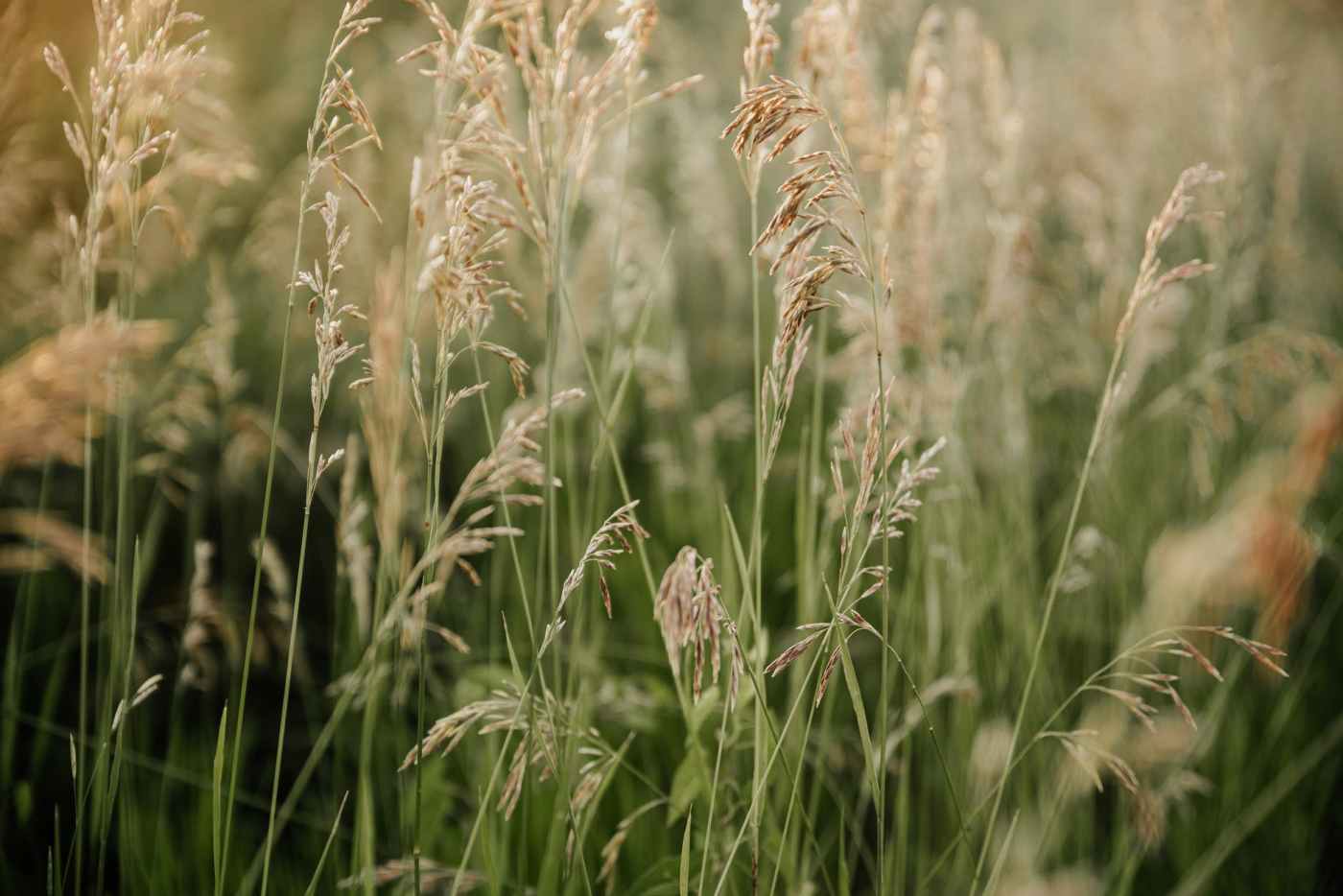
Oats look similar to tall, feathery grass, with their flowers hanging from branches attached to the main stem which is hollow and jointed. Their tips extend tall and house the seeds within individual oval, pointed husks (or florets). Green whilst young, oats turn straw-coloured as they mature.
The leaves are smooth at the base and become rougher at the tip, with rough margins. The leaf sheath can be round, smooth or hairy and split or overlapping.
Oats are an annual plant in the UK and can be sown both in the autumn and spring to allow for a double harvest [7]. They can be grown in clumps around the garden, similar to ornamental grasses [7]and are often used as a cover crop to help protect and rebuild soil. The roots help to stabilise the soil, as well as bioaccumulating calcium and magnesium [2].
They enjoy a well-drained but fertile soil with full sun coverage, growing to between 2ft – 5ft tall. Oats typically require a 60 day growth period after germination but those sown in summer months often require more (approximately 10 days).
Harvesting:
Best harvesting practice is dependent on which part of the oat you choose to work with. Milky oats have to be harvested within an extremely short window of about a week, when the seeds will have to be test squeezed in the run up to ensure you don’t miss it. Once harvested, it is best to tincture the seeds straight away with a ratio of 1:2 recommended. Blending the mixture helps greatly in extracting all that the oats have to offer.
Harvesting of oatstraw can be done throughout the oats growing season but it makes sense to harvest at the same time as the milky oat tops. This straw should be dried thoroughly by hanging in a warm, dry space. Once dried (so they can easily be snapped), lengths can be chopped into smaller pieces and stored in airtight containers for use throughout the year.
If you harvest just above ground level, you can often get a second growth ready to harvest in late summer [7].
In the past it was believed that oats should be left for the church bells to ring three times before they’re brought inside after harvesting, allowing three weeks drying in the sun [9]. Oats used for food are probably best purchased due to ease and accessibility, though it’s best to source organic oats.
History and other conditions:
Oats have a long history as a nourishing food, given to those suffering illness or malnourishment. They’re also said to help ease constipation and diarrhoea due to their being a good source of soluble fibre.
Their demulcent texture when soaked in water is helpful in soothing inflamed skin and oats have long been added to baths for such purposes [6].
In magic oats are used for prosperity and money spells as well as in harvest blessings [9][10].
Medicinal summary:
Fresh milky oats, oatstraw and dried oats are all used differently. Milky oats are viable for harvest only about one week per year. Oats are ready to harvest to this end when you squeeze the seed head and a milky, white substances is released. Fresh milky oat tincture is used as a soothing restorative to the nervous system, often recommended for those suffering acute periods of stress and/or exhaustion. It is most often indicated in those suffering burnout or whose nerves are fried. Those who are depleted to dryness are often indicated. It’s also used to support those who are attempting to quit smoking. There have also been promising studies, in relation to cognitive function [11], treating acne and supporting cardiovascular health [1].
Oatstraw refers to the stalk, often harvested and dried at same time as the milky seed heads. Oatstraw has some similar function as milky oats but is considered for use in more chronic, long-term situations. This fibrous material is rich in minerals [1][5] such as calcium, magnesium, chromium, niacin and silicon – all beneficial support for the bones, nails and hair. It is sometimes indicated in those suffering osteoporosis and similar conditions.
Whole oats are mature oats which have usually been minimally processed to use as a food source, as in cereals. Another food source is oat groats which are the mature whole seeds that have had the hull removed; these can be ground down and used, cooked into soups and stews or soaked overnight and eaten raw.
Oats have long been associated with reproductive health and have been turned to by men in particular to increase libido; note the saying “to sow his wild oats” [6].
Constituents:
- Avenins (a similar protein to gluten) [2][7]
- Β-glucan (high levels) [4]
- Calcium (high levels) [2][6]
- Fixed oils [3]
- Flavones [3]
- Glycosol flavones [2][9]
- Iron [3][9]
- Magnesium [2]
- Manganese [3][9]
- Proteins [3][9]
- Silica (high amounts) [2][3][8]
- Starches [3]
- Terpenoid saponins (oatstraw) [3]
- Vitamin B [2]
- Vitamin E [2][3][9]
- Zinc [3][9]
Actions:
- Antidepressant [2][9]
- Antispasmodic [2]
- Demulcent [2][6]
- Diuretic [7]
- Trophorestorative [2]
- Nervine [1][2][6][7][9]
- Nutritive [1][2][6][7]
Energy:
- Moist [1][9]
- Neutral temperature [1]
Taste:
- Salty [1]
- Sweet [1]
Preparations:
- Food (dried oats) [1][7]
- Infusion (oatstraw) [1][7]
- Herbal bath (dried oats) [1][6][7]
- Succus [2]
- Tincture (fresh milky oats) [1]
Recipes:
- If suffering a bone break, add oats to meals. Their high calcium content may help to strengthen the impacted bone [6].
- Oatstraw is a soothing infusion that can be drank throughout the day to soothe nerves, stress and tension. Up to 4 cups per day can be enjoyed without any sedative or negative effects.
- Oats can be added to baths in various forms. A strong oatstraw infusion added to bathwater can soothe on a nervous level. By adding whole oats to a sock or muslin bag to soak in the bath along with you, you can enjoy the demulcent benefits on inflamed, itchy or painful skin.
Safety:
- Though rare, oats can negatively impact some who have a gluten allergy or sensitivity so they’re best avoided or tested with great care in such situations. Oats contain avenin which is similar to gluten and can trigger this sensitivity [7].
- Wood tells us that oats are too sweet for some constitutions; ingesting too much can cause diarrhoea and a weak GI tract [3].
Dose:
- Tincture: Fresh milky oats (1:2, 95%), 10-30 drops, 3-5 times a day [8]
- Infusion: 4 oz – 8 oz, 1-4 times a day [8]
- Glycerite: Dried green oat straw (1:6), 10 ml-20 ml, 3 times a day [8]
Uses:
Stress
Perhaps the best known use of oats, especially in herbal circles, is for their effectiveness in those suffering nervous system and physical exhaustion [1][6][7][8] and conditions related to such conditions, such as anxiety [9], nervous palpitations/tachycardia [3][6][8][9], burnout [1], sleeplessness [7][9], tension [3][9], adrenal fatigue [9] and irritability [8][9]. Oats offer a safe and effective nervous system tonic that blends well with almost any other nervine whilst being used daily if needed [8],
In cases of palpitations, as in anxiety or panic disorders, oats are considered beneficial due to their supportive nature on nerves and their ability to reduce nerve excitation.
Oats are of specific benefit to autonomic and enteric (gastrointestinal) nervous systems that function involuntarily [2] due to their nutritive and demulcent qualities.
There are also reports of oats being used by those suffering drug withdrawal [1] and drug excess [3], periods when the emotional and physical body are often fraught.
Skin
Oats can be of great benefit to those suffering from dry skin conditions such as eczema. Silicon is a key constituent in strengthening connective tissue, skin, mucosa and nerves. Depending on the condition and areas of skin in question, oats can be taken internally or applied to topically, ensuring contact with the affected areas.
Reproductive health
Avena sativa has long been used by both men and women to support reproductive health [1]. They may be used by those in need of recuperating from sexual excess [3] as often as by those wishing to increase libido, such as younger men experiencing impotence [3][8][9].
Oats may also be of benefit to those experiencing PMS symptoms such as headaches, exhaustion, panic or nausea [3][9]. Allows us to lessen our sensitivity to environmental forces and allows us to approach them more calmly [9].
Miscellaneous
Due to oats nutritive quality, containing vitamins and minerals such as iron, magnesium and calcium, they can be added to the diet to increase nourishment of bones, hair, teeth and nails [1].
A recent 2020 study found that supplementation with green oats can benefit cognitive function [12], supporting, at least in part, practitioners’ use of milky oats for lack of focus, concentration and memory [3][8][12]
Oatbran also has a history of use as a bulk laxative [8] which is far more sustainable and accessible than the more common use of slippery elm.
Oatsraw, as opposed to whole oats or oatbran, has been used in baths of those suffering the likes of arthritis, rheumatism and fibromyalgia [3].
β-glucan, which is present in oats, is known to help lower cholesterol and high blood pressure and so oats are often recommended additions to the diets of those suffering such conditions [14][17][18]. Their antioxidant and anti-inflammatory activity [4][8] may also be of benefit in those presenting with high cholesterol and/or high blood pressure. Studies also show potential benefits of β-glucans on those suffering from type two diabetes [19][20].
References
Websites
- Rosalee de la Foret: https://www.herbalremediesadvice.org/health-benefits-of-oats.html
- Herb Rally: https://www.herbrally.com/monographs/oats
- Britannica: https://www.britannica.com/topic/oats
Books
4. Wood, M., 2008. The Earthwise Herbal: Volume 1. Berkeley: North Atlantic Books
5. Langelier, K., 2020. Herbal Revolution. Salem: Page Street Publishing Co.
6. Codekas, C., 2018. Healing Herbal Infusions. Salem: Page Street Publishing Co.
7. Chown, V. and walker, K., 2017. The Handmade Apothecary. London: Hachette
8. Fowler, A., 2019. A Modern Herbal. London: Penguin Random House.
9. Easley, T. and Horne, S. 2016. The Modern Herbal Dispensatory: A Medicine-making Guide. Berkeley: North Atlantic Books
10. Richardson, N., 2020. Your Period Handbook. London: Aeon Books Ltd
11. Cunningham, S., 2001. Encyclopedia of Magical Herbs. USA: Llewellyn Publications
Journals/articles
12. Kennedy DO, Bonnländer B, Lang SC, Pischel I, Forster J, Khan J, Jackson PA, Wightman EL. Acute and Chronic Effects of Green Oat (Avena sativa) Extract on Cognitive Function and Mood during a Laboratory Stressor in Healthy Adults: A Randomised, Double-Blind, Placebo-Controlled Study in Healthy Humans. In: Nutrients. 2020 May 29;12(6):1598. doi: 10.3390/nu12061598. PMID: 32485993; PMCID: PMC7352613.
13. El Hosary R, El-Mancy SMS, El Deeb KS, Eid HH, El Tantawy ME, Shams MM, Samir R, Assar NH, Sleem AA. Efficient wound healing composite hydrogel using Egyptian Avena sativa L. polysaccharide containing β-glucan. In: Int J Biol Macromol. 2020 Apr 15;149:1331-1338. doi: 10.1016/j.ijbiomac.2019.11.046. Epub 2019 Nov 9. PMID: 31712156.
14. Wolever TM, Gibbs AL, Brand-Miller J, Duncan AM, Hart V, Lamarche B, Tosh SM, Duss R. Bioactive oat β-glucan reduces LDL cholesterol in Caucasians and non-Caucasians. In: Nutr J. 2011 Nov 25;10:130. doi: 10.1186/1475-2891-10-130. PMID: 22118569; PMCID: PMC3252259.
15. Wong RH, Howe PR, Coates AM, Buckley JD, Berry NM. Chronic consumption of a wild green oat extract (Neuravena) improves brachial flow-mediated dilatation and cerebrovascular responsiveness in older adults. In: J Hypertens. 2013 Jan;31(1):192-200. doi: 10.1097/HJH.0b013e32835b04d4. PMID: 23221935.
16. Lammert A, Kratzsch J, Selhorst J, Humpert PM, Bierhaus A, Birck R, Kusterer K, Hammes HP. Clinical benefit of a short term dietary oatmeal intervention in patients with type 2 diabetes and severe insulin resistance: a pilot study. In: Exp Clin Endocrinol Diabetes. 2008 Feb;116(2):132-4. doi: 10.1055/s-2007-984456. Epub 2007 Dec 20. PMID: 18095234.
17. Queenan KM, Stewart ML, Smith KN, Thomas W, Fulcher RG, Slavin JL. Concentrated oat beta-glucan, a fermentable fiber, lowers serum cholesterol in hypercholesterolemic adults in a randomized controlled trial. In: Nutr J. 2007 Mar 26;6:6. doi: 10.1186/1475-2891-6-6. PMID: 17386092; PMCID: PMC1847683.
18. Charlton KE, Tapsell LC, Batterham MJ, O’Shea J, Thorne R, Beck E, Tosh SM. Effect of 6 weeks’ consumption of β-glucan-rich oat products on cholesterol levels in mildly hypercholesterolaemic overweight adults. In: Br J Nutr. 2012 Apr;107(7):1037-47. doi: 10.1017/S0007114511003850. Epub 2011 Aug 3. PMID: 21810288.
19. Lammert A, Kratzsch J, Selhorst J, Humpert PM, Bierhaus A, Birck R, Kusterer K, Hammes HP. Clinical benefit of a short term dietary oatmeal intervention in patients with type 2 diabetes and severe insulin resistance: a pilot study. In: Exp Clin Endocrinol Diabetes. 2008 Feb;116(2):132-4. doi: 10.1055/s-2007-984456. Epub 2007 Dec 20. PMID: 18095234.
20. Ma X, Gu J, Zhang Z, Jing L, Xu M, Dai X, Jiang Y, Li Y, Bao L, Cai X, Ding Y, Wang J, Li Y, Li Y. Effects of Avena nuda L. on metabolic control and cardiovascular disease risk among Chinese patients with diabetes and meeting metabolic syndrome criteria: secondary analysis of a randomized clinical trial. In: Eur J Clin Nutr. 2013 Dec;67(12):1291-7. doi: 10.1038/ejcn.2013.201. Epub 2013 Oct 16. PMID: 24129363.
 Herbal She Wrote
Leave a comment