It’s December and that means holidays, parties, colds and lurgies. We won’t talk about the C-word or specifically the O-variant, there’s enough of that out there at the moment, being discussed by people with both far more knowledge than I and far less.
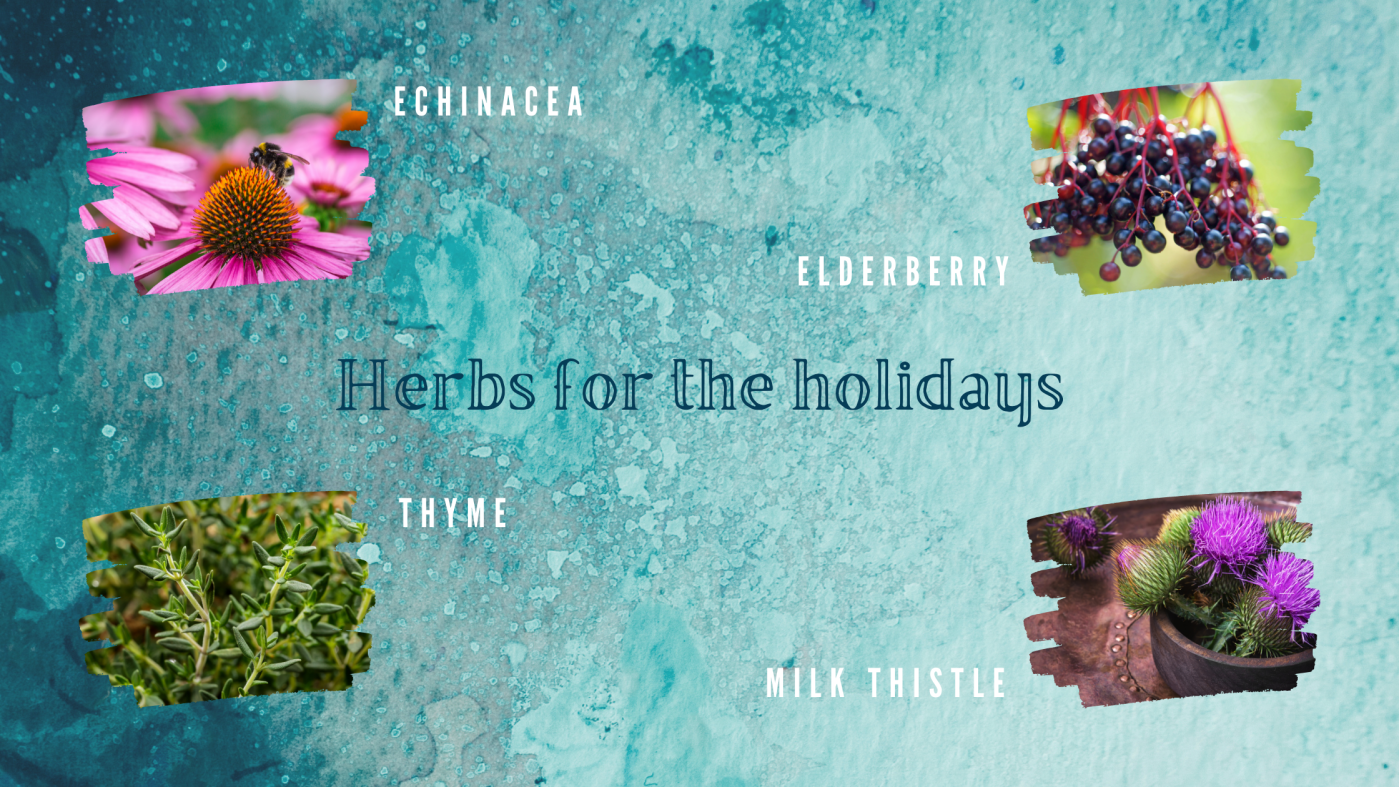
Let’s instead look at four herbs that I think are the go-to herbs of the season . Those that I know I want a solid stock of before December rolls around, for one reason or another.
- Milk Thistle (Silybum marianum)
I recently posted on Insta that, to me, Milk Thistle is THE December herb. The reason for this is because so many of it’s benefits and actions help the body cope with what we experience at this time of year. Silybum, apart from having the best Latin name ever, is incredibly safe, with no known contraindications, so can be taken by pretty much everybody in one form or another. It’s also one of the few herbs that actually works really well in capsule form, making it really easy to take regularly with no excuses.
It’s a herb most well known for it’s ability to support the liver – being protective, cooling and supportive of the liver tissue – making it a huge asset when we’re boozing it up a bit more often than we usually might. Taken before and after drinking, Milk Thistle can really help the liver in it’s detoxification process, reducing any inflammation caused in the process and helping it to regenerate as needed. I avoid the tincture when used specifically for the liver (or lean towards a glycerite if I want the ease but not the alcohol) as I just can’t get past utilising alcohol when trying to support the liver, especially in this case, when the liver has already been hit hard with alcohol. When taken as a food (grind up the seeds and mix them into anything you like) you really benefit from Milk Thistle’s mucilaginous properties. More hydration can only help after a night of excess!
Not just beneficial for those of us partaking of a little too much eggnog, Milk Thistle has some capacity to lower blood sugar levels, and who isn’t indulging in a little too much sugar at this time of year? I also find St. John’s Wort (Hypericum perforatum) another helpful ally when I’m hitting the sugar hard.
Finally, Milk Thistle is a great friend to those suffering from stress and exhaustion and who isn’t suffering from both at this time of year? Mum’s, dad’s, kid’s, workers, non-worker’s – one thing I’m sure of – stress abounds in December. The reason is, adrenaline and cortisol (our stress hormones) all need to be processed by the liver. Higher stress = higher quantities of these hormones to be processed so helping the liver at such high intensity times is key.
- Echinacea (Echinacea angustifolia)
By now I think most people are aware of the benefits of Echinacea. Considering how much research has been conducted it is positively “mainstream”. Many possibly even incorporate it into their winter protocol but sometimes it’s worth saying it all again.
Let’s not get into which species is best here. The argument is rife amongst herbalists so you can go elsewhere to read all that. I honestly buy the species I can afford at the time or, more recently, the species I grew in a plant pot. A good test of Echinacea tincture, however, is whether it causes a “tingle” in your mouth and/or throat. You want that tingle, that is a sign of all the good constituents being present, starting to do their work.
Echinacea is an immune stimulant and immune modulator with additional antimicrobial, analgesic and anti-inflammatory actions, used for 400+ years. Timing is important; taking it only in the later phases of a bug may not make any difference at all. I’d probably argue to start taking it daily when lurgy season first hits in your area myself. It won’t do you any harm but may save you from the harshest effects of colds and flu being passed around.
- Thyme (Thymus vulgaris)
When not around other herby folks I start to wonder if I’m the only person who appreciates Thyme aside from it’s addition in a chicken dinner. However, in cold season, I remember it’s true power. I can’t quite palate a Thyme tea unless full of lurgy but a Thyme steam is something I refuse to live without in the winter months. Thyme essential oil can be a bit too overpowering but utilising volatile oils present in the dried herb, boiling water and a towel to cover yourself, is just right.
Thyme has a range of actions but those we’re looking at here include: antiseptic, antispasmodic, antimicrobial, antioxidant, antiviral, antibacterial, astringent, and expectorant.
Thyme steams don’t even need to be limited to when you have a cold. In fact I’d recommend wholeheartedly you don’t save them just for such times. You can benefit from a Thyme steam every time you come into the house after braving and particularly germy hotspots (I’m looking at you trains, buses, supermarkets…) and take full advantage of those antiviral and antibacterial properties and maybe miss a bout or two of the cold and flu going around at the time.
- Elder (Sambuccus nigra)
Elder really brings us two gifts during this season – elder berries and elder flowers. Both offer exceptional support thanks to their diaphoretic (sweat-inducing) and antiviral actions.
Elder berry syrup is slowly but surely making It’s way to becoming another “mainstream” stable and I can’t fault that at all. Though honestly, with so many variations of recipes out there, I would recommend making your own over buying any I’ve come across on the shelf. Fresh berries are nice to use if you have access but I have yet to cross a period when dried can’t be purchased and that’s what I use. AS with Echinacea, when taken at the onset of a bug, elder berry tincture/syrup (as you prefer) can interfere with virus replication, shortening the duration.
Elder flower may be best known for it’s use in cordial and wine but it’s another great ally for colds and flu. An old recipe I make use of every year is equal parts elder flower, peppermint and yarrow as an infusion, which helps push a fever, soothe inflamed tissue and clear the nose and lungs in a gentle manner. It’s a recipe gentle enough to be given to children and for this reason, adults sometimes avoid it. Not me though. That is my tea of choice when the nose starts to congest and my head starts to feel heavy.
Truthfully, so much more could be written about each of these herbs, and one day no doubt I will write a monograph for all, but for now I’m going to go and take my Milk Thistle, order a treat of a dinner and toast a glass of wine to the season.
 Herbal She Wrote
Leave a comment